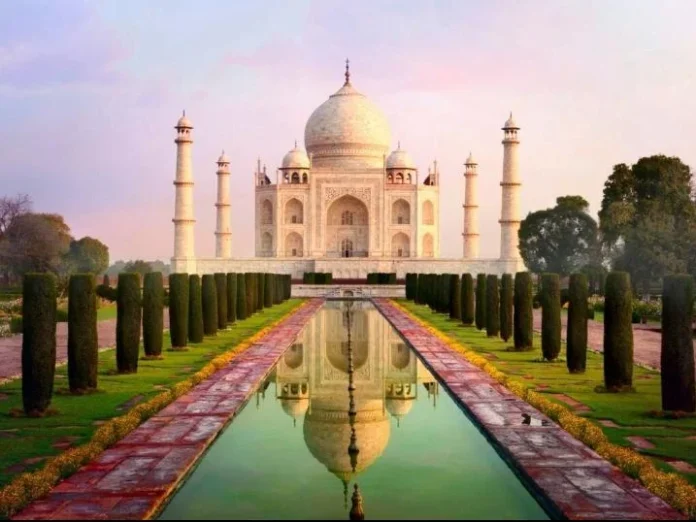

PART 1: A Love That Began Like No Other
Long before the Taj Mahal became one of the most famous monuments in the world, it was simply an idea—an idea born from love, loss, and a promise that would echo through history.This story begins with a powerful Mughal emperor named Shah Jahan and a woman whose beauty and character captured his heart forever, Mumtaz Mahal.Their love was not ordinary. It was not built on status, wealth, or politics. It was something deeper—something rare.Shah Jahan first met Mumtaz Mahal when they were young, and from that moment, he knew she was different. She was not only beautiful but intelligent, kind, and deeply understanding.Even before they were married, their connection was strong. It was as if they understood each other without words. A Bond Beyond Royal Tradition At that time, it was common for emperors to have multiple wives. Shah Jahan was no exception.However, despite having other wives, Mumtaz Mahal became the center of his world.She was not just his queen. She was:His closest companionHis trusted advisor His emotional supportWherever he went, she followed.Whether it was royal duties or military campaigns, Mumtaz Mahal stayed by his side. This was unusual for a queen, but it showed how deep their bond truly was.Their love was visible to everyone around them. A Love That Grew Stronger Over TimeYears passed, and their love only grew stronger.They shared:Moments of joyMoments of struggleMoments of responsibilityMumtaz Mahal gave birth to many children, and through it all, Shah Jahan remained devoted to her.Their relationship was built on trust, respect, and emotional connection. It was a love that many people dream of but few ever experience.
PART 2: The Tragedy That Changed Everything

In the year 1631, during a military campaign, tragedy struck.Mumtaz Mahal was pregnant with their 14th child. Despite the risks, she stayed with Shah Jahan during the journey.But during childbirth, complications arose.Her condition worsened.And soon, the unthinkable happened. Mumtaz Mahal passed away. Her Final Words Before she died, it is said that Mumtaz Mahal made a final request to Shah Jahan.She asked him:To always take care of their childrenTo build something in her memory—something that would never be forgottenThese words stayed with him forever. A Broken Emperor The death of Mumtaz Mahal shattered Shah Jahan.He was no longer the same man.He withdrew from public life He spent long periods in mourning His appearance changed—his hair turned grayThe powerful emperor who once ruled with confidence was now a man broken by love and loss.
PART 3: The Birth of the Taj Mahal

In his grief, Shah Jahan made a decision.He would build something that would keep her memory alive forever.That decision led to the creation of the Taj Mahal. A Monument of LoveThe Taj Mahal was not just a building.It was a symbol.A symbol of:Eternal loveDevotionMemoryConstruction began soon after her death. Years of DedicationThe construction of the Taj Mahal took more than 20 years.Over 20,000 workers were involved.Materials were brought from different parts of the world:White marblePrecious stonesDecorative elementsEvery detail was carefully designed.Every pattern had meaning. Beauty Beyond WordsThe final result was breathtaking.The Taj Mahal stood as a perfect example of:SymmetryEleganceArtistic brillianceWhen you look at it, you don’t just see a building.
You see a story.
PART 4: The Meaning Behind the Monument

The Taj Mahal is more than a tourist attraction.It is a message. Love can outlive death.It reminds us that true love:Does not disappearDoes not fadeDoes not endEven after Mumtaz Mahal was gone, her presence remained. A Lesson for EveryoneThis story teaches us something important.In a world where many relationships are temporary, this love story shows what real commitment looks like.LoyaltySacrificeDeep emotional connection
PART 5: The Final ChapterLater in life, Shah Jahan was overthrown by his own son.He was placed under house arrest in a nearby fort.From his window, he could see the Taj Mahal in the distance.Every day, he looked at it.Not as a monument.But as a memory of the woman he loved.
A Reunion in DeathWhen Shah Jahan passed away, he was buried inside the Taj Mahal, next to Mumtaz Mahal.
ADDITIONAL SECTION: The Lasting Legacy of the Taj Mahal

The story of the Taj Mahal did not end with the passing of Shah Jahan and Mumtaz Mahal. In fact, that was only the beginning of its journey into becoming one of the most recognized symbols of love in the world.Over the centuries, millions of people from different countries, cultures, and backgrounds have traveled to India just to witness this incredible monument. Some come as tourists, some as historians, and many come as lovers—curious to experience the feeling that this place represents.When visitors stand in front of the Taj Mahal, they often describe a unique emotional experience. It is not just about the beauty of the white marble or the perfection of its design. It is something deeper. There is a sense of calm, a feeling of timelessness, and a quiet reminder that true love can leave a lasting mark.The architecture itself tells a story. Every curve, every carving, and every piece of stone was placed with intention. The symmetry of the structure reflects balance, while the detailed calligraphy and patterns symbolize art, faith, and devotion. Even the reflection of the Taj Mahal in the water creates a mirror-like image, representing how love reflects itself across time.Another powerful aspect of the Taj Mahal is how it changes throughout the day. In the early morning, it appears soft and peaceful under the rising sun. During the day, it shines brightly, showing its full beauty. At sunset, it takes on a golden glow, creating a romantic and almost dreamlike atmosphere. And under the moonlight, it becomes something truly magical—quiet, mysterious, and deeply emotional. This transformation throughout the day reminds us that love, too, has different phases. It is not always the same, but its essence remains strong.The Taj Mahal also teaches us about legacy. Shah Jahan did not just build a monument; he created something that would outlive him, something that would continue to tell his story long after he was gone.Today, people still speak about his love. They still admire his devotion. And they still feel inspired by what he built. That is the true power of love—it creates something that time cannot destroy.In a world where many things are temporary, the Taj Mahal stands as proof that some emotions are eternal. It reminds us that real love is not just about words or moments. It is about commitment, sacrifice, and leaving behind something meaningful.As you reflect on this story, think about your own life. What kind of legacy do you want to leave behind? What kind of impact do you want your love to have? Because in the end, it is not about how long we live. It is about what we create, what we feel, and what we leave behind.